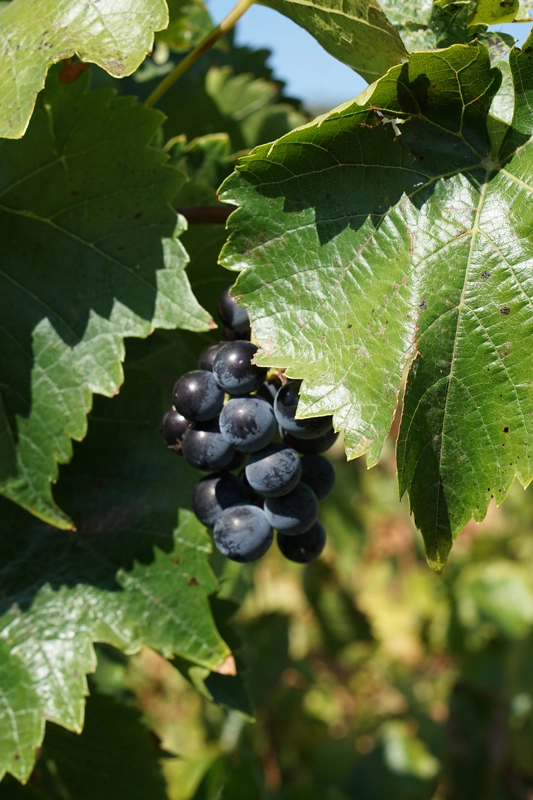
Most wine drinkers have never heard of Mouhtaro. Most Greek winemakers haven’t worked with it. The grape nearly vanished from Boeotia’s vineyards, quietly edged out by varieties with bigger names and easier reputations. That it still exists at all is largely down to one family.
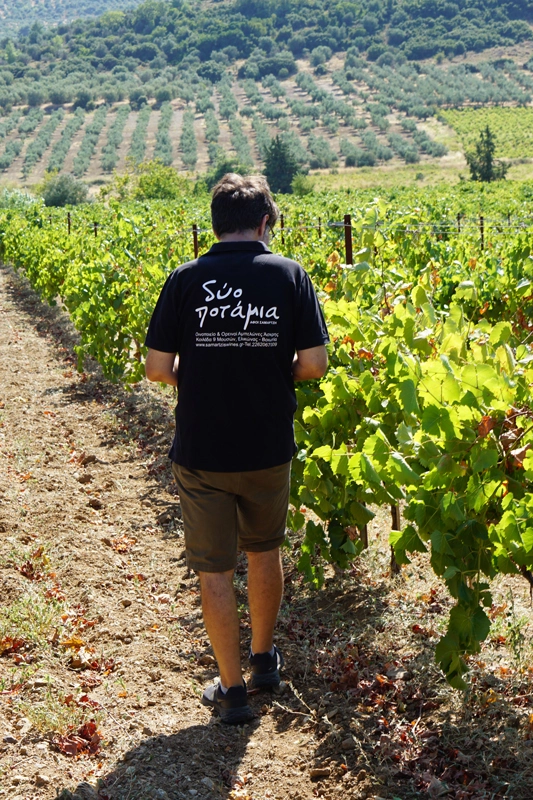
The Samartzis estate sits in Askri, in the Valley of the Muses, on the south slopes of Mount Helicon. The name sounds romantic. The reality is lean mountain soil, clay and gravel, vineyards at 380 to 420 metres, and vines that have to fight for everything they produce. Panos Samartzis is working 32 hectares across 25 distinct plots. No irrigation. Hand harvesting. No shortcuts.
A grape with no comparison
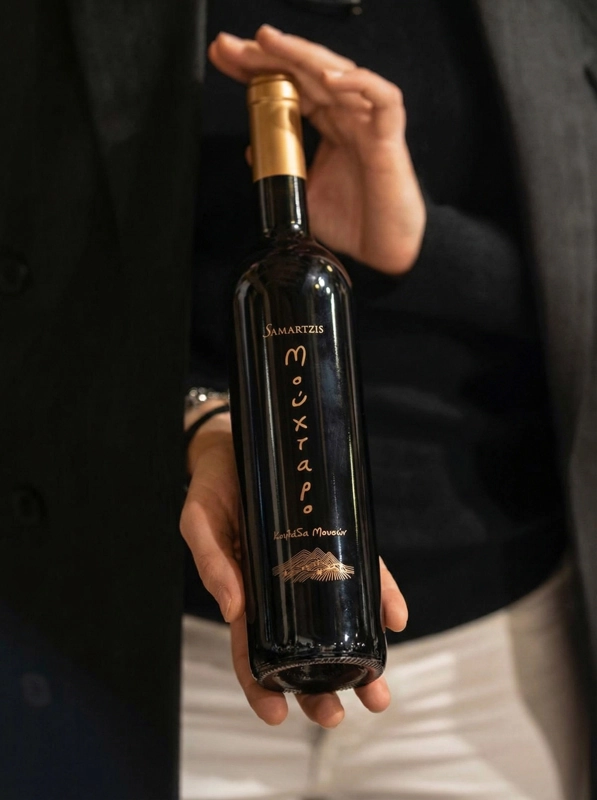
Mouhtaro doesn’t remind you of anything else. That’s not marketing language. It is a genuine varietal dead end in the best possible sense. There is no easy shorthand, no “it’s like Syrah but…” or “think of it as Greek Malbec.” It occupies its own space: dark-fruited, nervy, structured, with a kind of restless energy that keeps pulling you back to the glass. For sommeliers building lists with genuine points of difference, this is the kind of wine that starts conversations.
It also happens to be one of the rarest single-varietal bottlings in Greece. Very few producers work with Mouhtaro at all, and even fewer bottle it unblended. Samartzis does, because the grape is strong enough to stand on its own, and because blending it away would defeat the purpose of saving it in the first place.
Vineyard and cellar: nothing borrowed
The 2022 vintage comes from the Papanikolas plot, a named site at 380 to 420 metres on clay and gravel soils. The vines are cultivated entirely by hand, non-irrigated, and harvested manually. This is farming that prioritises concentration and character over volume.
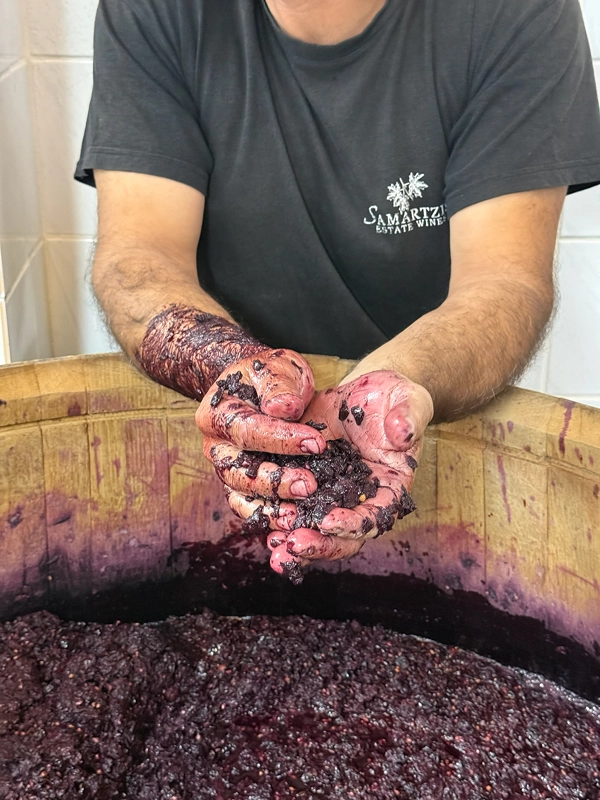
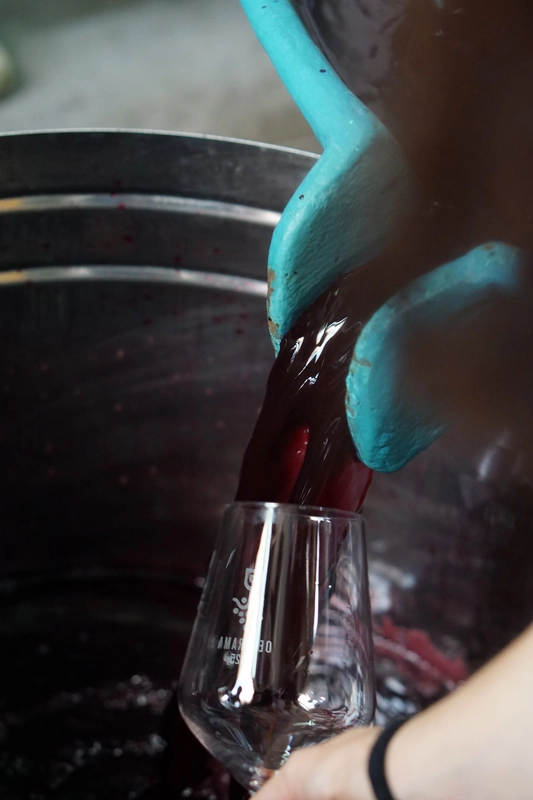
In the cellar, the approach is just as deliberate. Fermentation uses pigeage in open 300 to 500 litre casks over 20 days. Pressing is done with a manual vertical press manufactured in Italy in the late 1930s. Not a museum piece. A working tool that delivers gentle extraction and texture you can feel in the finished wine. Ageing follows in 300 to 500 litre barrels for 10 to 12 months, then another 12 months in bottle before release.
No new oak fireworks. No heavy-handed extraction. The wine is polished, but the polish comes from the vineyard and from patience, not from technique.

The commercial case
For buyers, Mouhtaro solves a real problem. Greek wine lists are getting more interesting across Europe, but most of the conversation still circles around Xinomavro and Assyrtiko. Those are strong wines, but they are no longer discoveries. Mouhtaro is. It gives a wine list genuine depth and a talking point that goes beyond the usual Greek narrative.
By the glass, it has the structure and intensity to hold up next to heavier reds without the weight. It drinks with purpose but stays balanced. For on-trade buyers looking for reds that pair well across a range of grilled meats, charcuterie, aged cheeses, and hearty Mediterranean cooking, this is a versatile and distinctive option.
The price-to-quality ratio is strong for the category. A single-varietal wine from named vineyard plots, hand-farmed, barrel-aged, and from a producer with over four decades of history. That package, at this price level, is hard to match anywhere in the Mediterranean.
Recognition
The market is catching on. The 2018 vintage earned a Silver Medal and 90 points at the Decanter World Wine Awards, plus a Gold Medal at the 9th Balkans International Wine Competition. These are not niche accolades. They confirm what the wine already communicates: this is serious, and it belongs in serious company.
Why it matters
Mouhtaro is not trying to be Bordeaux. It is not chasing trends or imitating international styles. It is Greece on its own terms, from a region and a grape that most of the wine world hasn’t caught up with yet.
For sommeliers and buyers who want to list wines with real identity, provenance, and a story that doesn’t need to be exaggerated, Samartzis Mouhtaro is one of the most compelling Greek reds available today. Not because it fits neatly into an existing category, but because it doesn’t.
It stands alone. And that is exactly the point.