Say Assyrtiko and Santorini comes first.
It should.
Santorini is where the variety built its reputation. Old vines, volcanic soils, extreme wind, almost no rain and wines with enough acidity to make you sit up straight. It gave Assyrtiko an identity outside Greece.
But Santorini is not Assyrtiko.
It is one expression of it.
Today, Assyrtiko is planted across Greece, from the northern mainland to the Peloponnese and other Aegean islands. And this is where the variety becomes more interesting.
Because once you remove Santorini from the equation, you can start seeing what belongs to the grape and what belongs to the place.
The answer is not always obvious.
So, what stays?
Assyrtiko has one extremely useful habit: it keeps its acidity.
That matters in Greece.
Warm summers can easily push white varieties towards ripeness, weight and softness. Assyrtiko tends to hold its structure. It can reach full maturity without falling apart.
That does not mean every Assyrtiko tastes of lemon, salt and stone.
Change the soil, altitude, climate and winemaking, and you can end up with very different wines.
Here are four examples.
Same grape. Different Greece.
Akrathos Assyrtiko
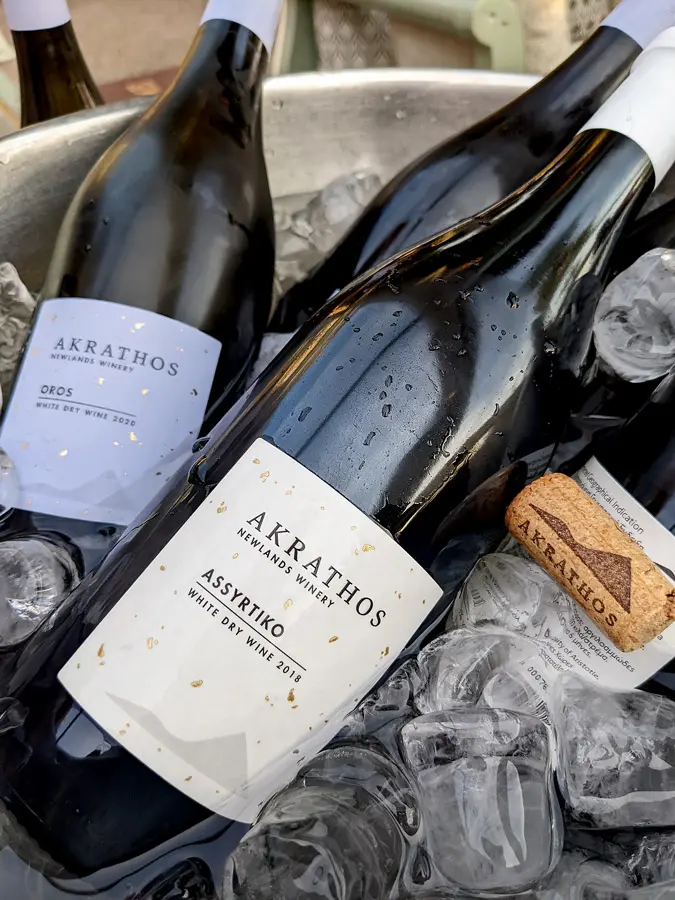
Akrathos gives us a very different starting point from Santorini.
We are in northern Greece, in Halkidiki, in a mountainous environment rather than a dry volcanic island. The wine is 100% Assyrtiko and spends extended time on its fine lees.
That lees contact matters.
The wine keeps the acidity and mineral structure we expect from Assyrtiko, but it gains more texture and volume. It is not trying to imitate Santorini. And that is exactly the point.
There is a tendency to describe every mainland Assyrtiko by explaining how close, or how far, it sits from Santorini.
I don’t find that particularly useful.
Akrathos is better understood as Halkidiki Assyrtiko. Different climate. Different soil. Different conditions. Different result.
It gives the grape a broader frame without taking away its backbone.
Zafeirakis Assyrtiko
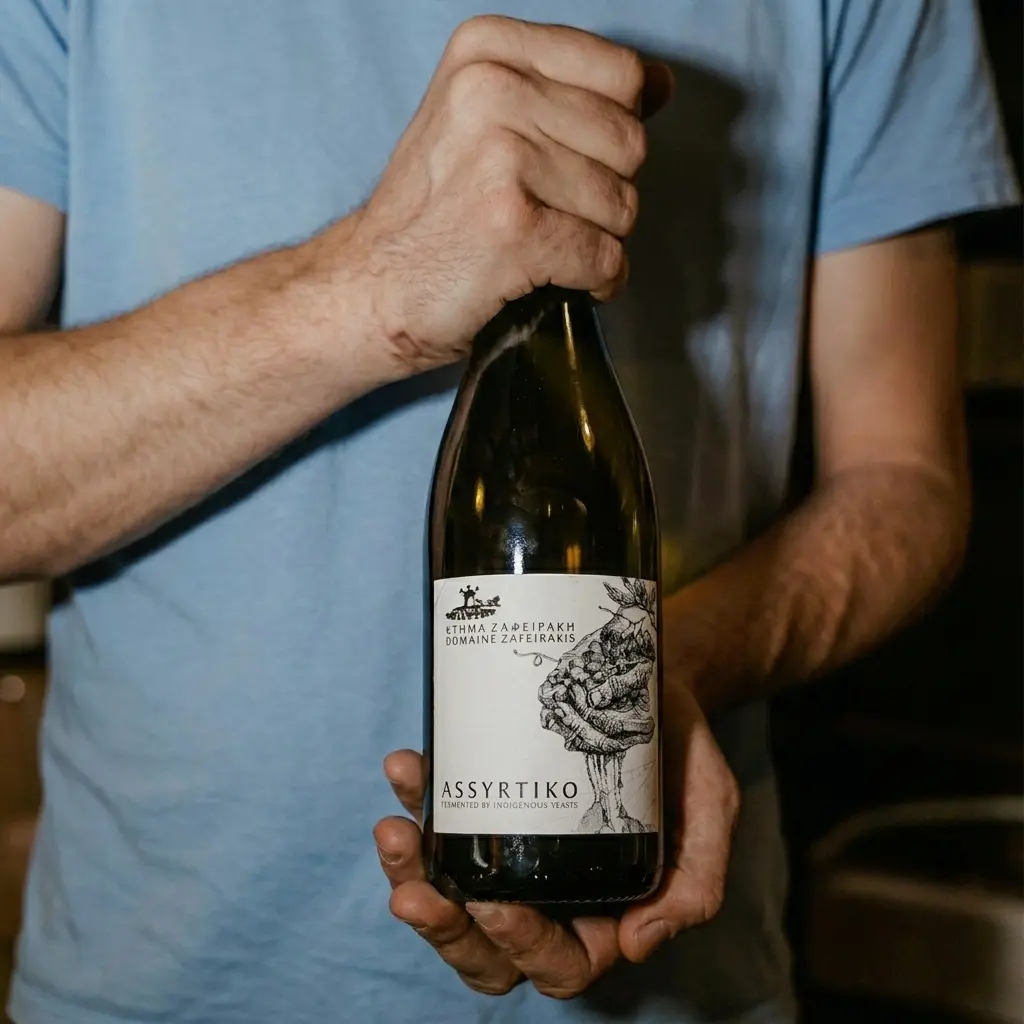
Move west to Tyrnavos and the picture changes again.
Zafeirakis grows Assyrtiko at around 200 to 300 metres, on sandy-clay soils with a high concentration of flint. The vineyards are organically farmed and the estate has followed biodynamic cultivation since 2019.
The winemaking is relatively straightforward. Spontaneous fermentation. Stainless steel.
That makes this an especially useful wine in a comparison like this.
There isn’t much cellar furniture to hide behind.
You get a clearer view of what Assyrtiko does in Tyrnavos: freshness, acidity and structure, but from a completely different landscape.
If Akrathos shows what lees ageing can add to mainland Assyrtiko, Zafeirakis gives us something closer to a stripped-back regional expression.
And sometimes that tells you more.
Acra Assyrtiko
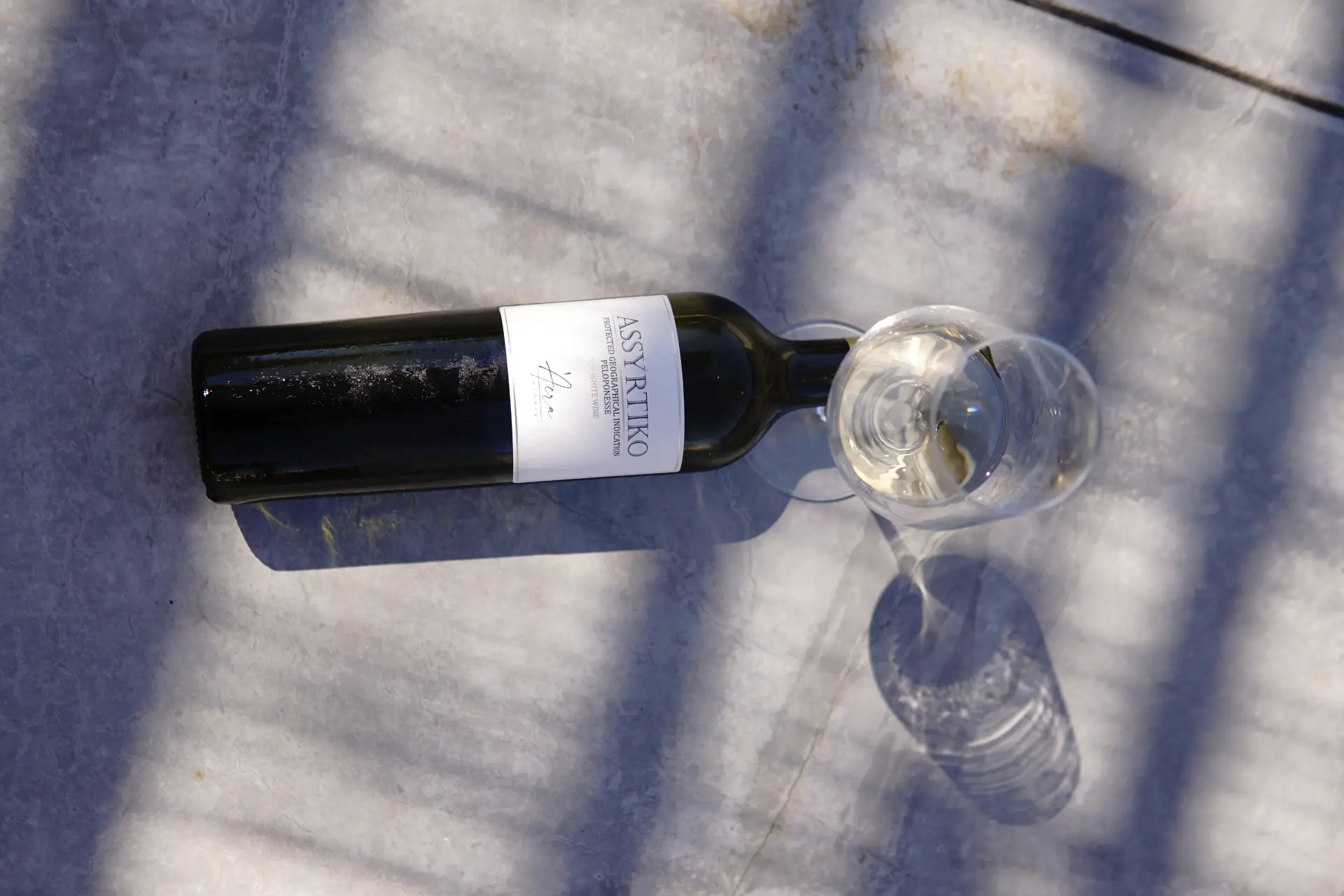
Then comes Nemea.
Yes, Nemea.
A region almost automatically associated with Agiorgitiko is now giving us a serious Assyrtiko as well.
Acra is based in Nemea, in Corinthia, and the story behind the wine makes the comparison even more interesting.
Winemaker Spyros Papandreou is also the oenologist at Hatzidakis Winery in Santorini.
So this is not someone approaching Assyrtiko from the outside. He knows the grape in its most famous home. Then he takes that experience back to Nemea and works with completely different conditions.
The result is not an attempt to recreate Santorini.
Acra’s Assyrtiko is matured for around 10 months on its fine lees, divided between stainless steel, concrete eggs and French oak.
That immediately takes the wine in another direction.
The acidity is still there, but there is more breadth. More texture. More weight through the middle. The concrete and lees build volume, while the oak adds another structural layer without turning the wine into an oak-driven white.
This is where Assyrtiko starts becoming particularly interesting for a wine list.
Not just refreshing. Not just mineral.
Gastronomic.
A wine that can sit comfortably next to richer whites and handle food that would overwhelm a simpler stainless-steel expression.
Vaptistis Antara
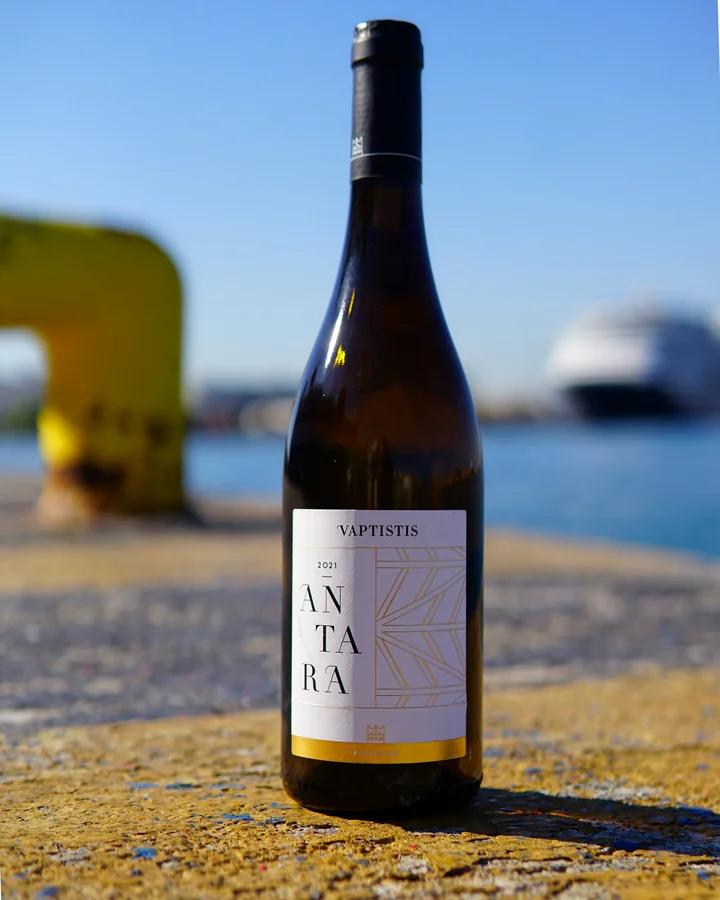
And then there is Tinos.
This is important because leaving Santorini does not necessarily mean leaving the Cyclades.
Vaptistis Antara is 100% Assyrtiko from Tinos, grown at around 430 metres on schist and slate soils. Fermentation takes place in stainless steel, followed by around 6 months on fine lees.
Same archipelago. Completely different geology.
Which immediately challenges another shortcut.
Island Assyrtiko and Santorini Assyrtiko are not the same thing.
Antara has the tension and freshness that make the variety recognisable, but it comes through a different landscape. Higher altitude, different rocks, different exposure.
The wine is linear, focused and saline, but not because somebody tried to make a Santorini lookalike.
It is Tinos.
Again, that is the interesting part.
Four wines. Four different jobs.
Put these wines next to each other and the differences become much more useful than the similarities.
- Akrathos, Halkidiki: structured, mineral and textured, with extended lees ageing.
- Zafeirakis, Tyrnavos: clean and direct, with stainless steel putting more focus on the vineyard.
- Acra, Nemea: broader and more layered, using steel, concrete, oak and long lees contact to push Assyrtiko into more gastronomic territory.
- Vaptistis Antara, Tinos: tense and linear, showing that the Cyclades themselves have more than one Assyrtiko identity.
None of these wines needs to beat the others.
That would miss the point.
They are useful because they show how far the grape can move without losing itself.
Maybe “typical Assyrtiko” is the wrong question
Santorini remains the benchmark.
It has the history, the vineyards and a combination of conditions that cannot be reproduced elsewhere.
But that does not make every other Assyrtiko a secondary version.
The more useful way to look at the variety is the same way we look at many established European grapes.
We don’t expect Chardonnay from Chablis, Meursault and Alto Adige to taste the same.
We don’t ask which one is the “real” Chardonnay.
We look at what the grape does in each place.
Assyrtiko deserves the same treatment.
Halkidiki does not need to taste like Santorini.
Neither does Tyrnavos.
Neither does Nemea.
Neither does Tinos.
What this means on a wine list
This is where the subject stops being academic.
Assyrtiko does not have to occupy one position on a list.
A leaner stainless-steel expression can work where you need acidity, precision and freshness.
A longer lees-aged version can bring more texture while keeping the same structural energy.
A wine such as Acra can move towards richer dishes and a more serious white-wine position.
An island expression from somewhere other than Santorini can offer the same sense of discovery without simply repeating what is already familiar.
In other words, Assyrtiko can become a category.
Not one bottle labelled “Greek white”.
Not one obligatory Santorini reference.
A grape that can offer different origins, different styles and different roles.
Santorini gave Assyrtiko its passport.
The rest of Greece is now filling in the pages.