Limniona almost disappeared from the conversation.
Today, it is one of the Greek red varieties worth paying attention to. And if there is one producer closely connected with its return, it is Ktima Zafeirakis.
Christos Zafeirakis is a fourth-generation winemaker who studied oenology in Athens before continuing his education in Turin and Milan. After several years working across Piemonte, Alto Adige and Tuscany, he returned to Greece in 2005 and planted his first organic vineyard.
But the more interesting part of the story is what happened next.
A grape worth bringing back
Limniona is an indigenous Greek red variety that had largely fallen out of focus.
Zafeirakis saw something worth keeping.
Not because it could become Greece’s next big, powerful red. Quite the opposite.
Limniona offers freshness, perfume and a more restrained structure. It can produce wines with plenty of character without relying on excessive extraction, alcohol or oak to make the point.
That makes it particularly relevant today.
For wine professionals looking beyond the usual Greek varieties, Limniona offers something genuinely different. It is unfamiliar enough to create discovery, but stylistically approachable enough to earn its place on a list.
And at Ktima Zafeirakis, you do not get just one interpretation of it.
You get three.
Three ways to understand Limniona
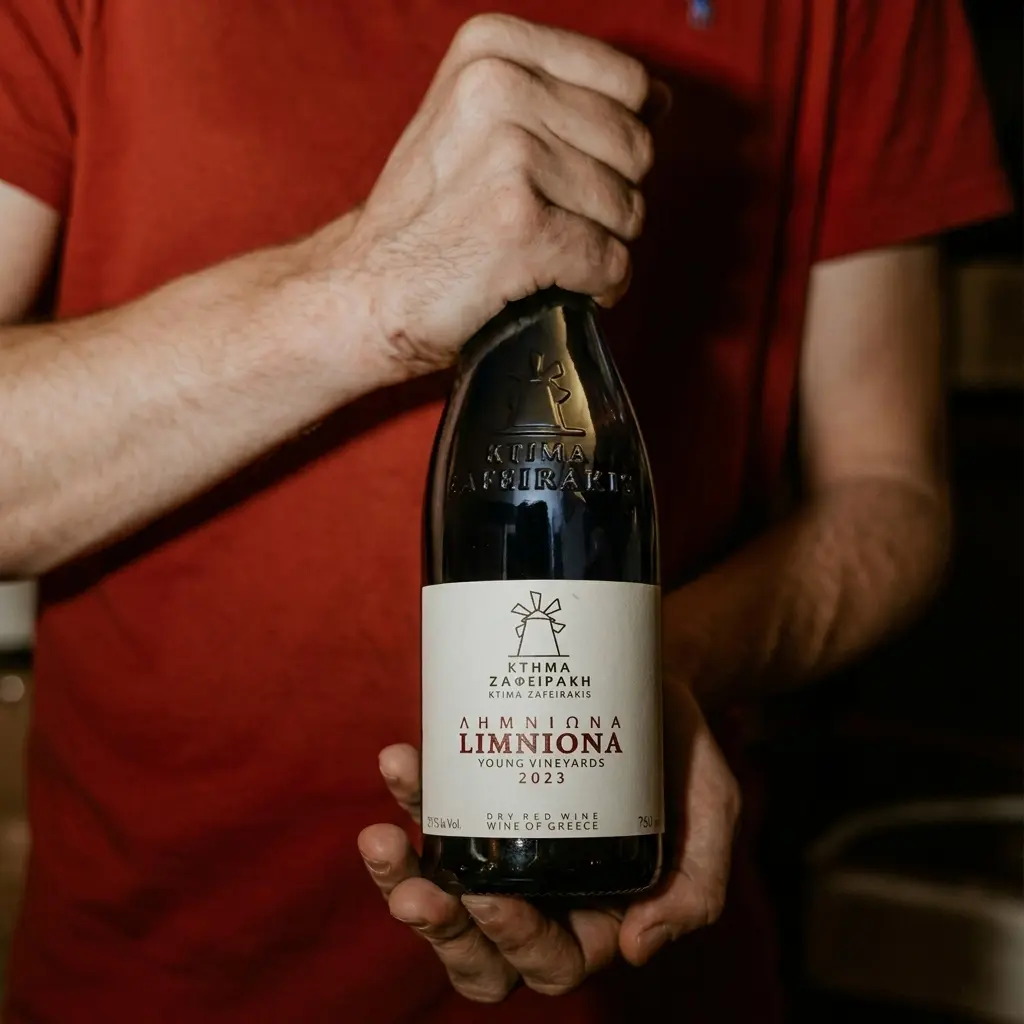
Limniona Young Vineyards is the starting point.
It comes from younger vines, between 10 and 15 years old, and spends 12 months in large 3,000L and 5,000L barrels. Fermentation happens spontaneously, with an extraction period of around 15 to 20 days.
The idea is relatively simple: keep the fruit visible, keep the wine moving, and let Limniona introduce itself without too much interference.
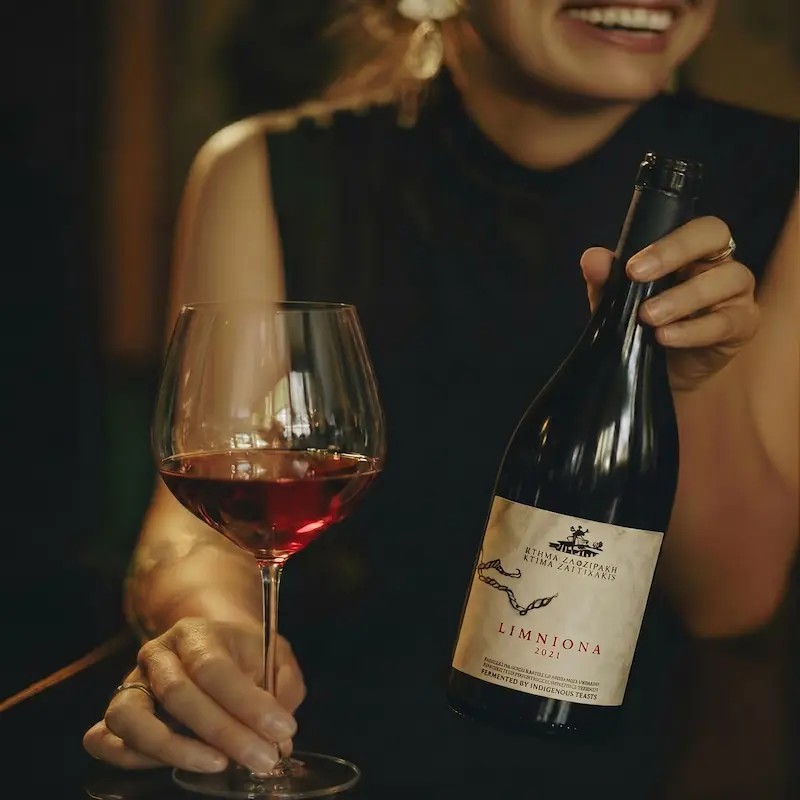
Then comes the estate’s main Limniona.
Here the vines are considerably older, between 30 and 38 years. Fermentation takes place in large wooden tanks, followed by 18 months of maturation in 1,200L and 2,400L barrels.
The result is a more structured and serious interpretation, but still built around the character of the grape rather than the character of the oak.
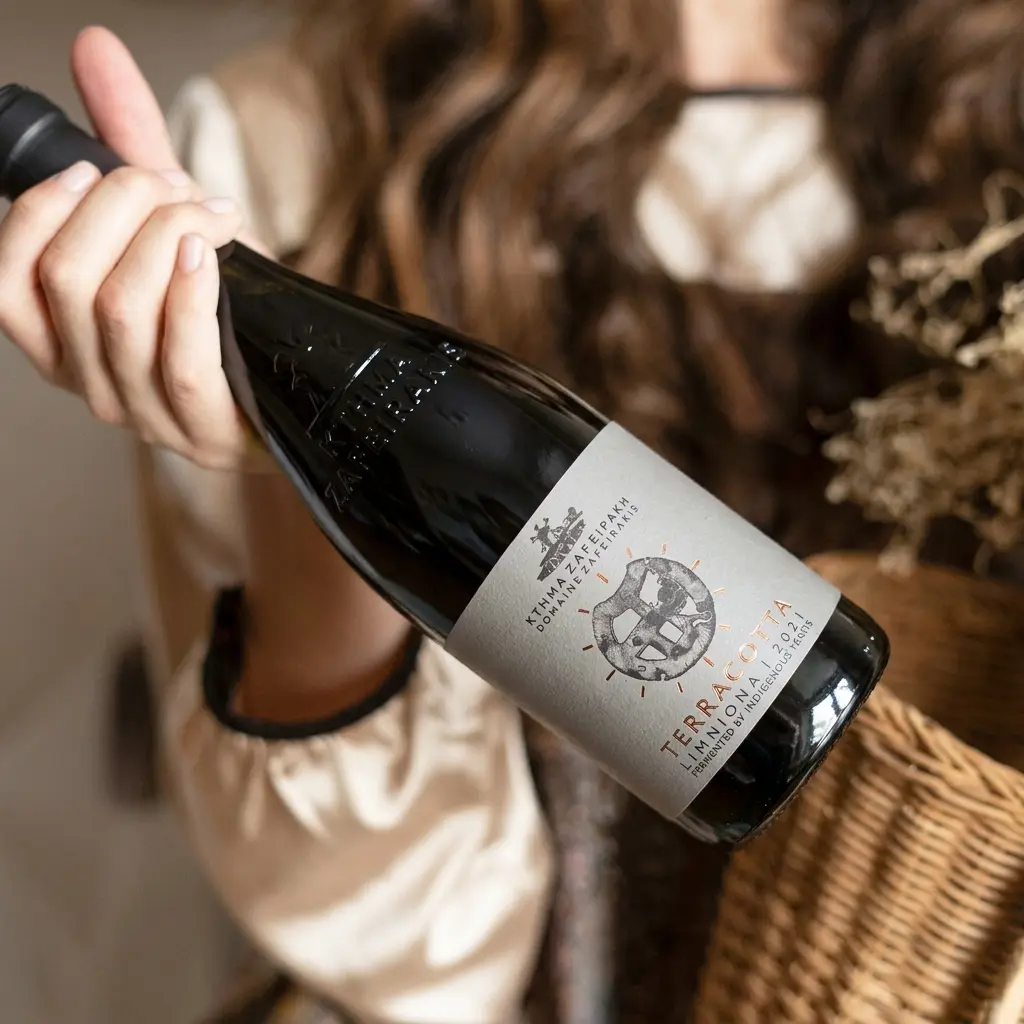
And then there is Terra Cotta Limniona.
The fruit again comes from 30 to 38-year-old vines, but after fermentation the wine spends 12 months in 320L and 440L amphorae.
Same variety. Similar philosophy. Completely different élevage.
For anyone trying to understand what Limniona can actually do, the three wines offer a useful progression rather than three variations of the same bottle.
Farming is part of the story
Zafeirakis has farmed organically since 2005 and biodynamically since 2019.
The estate now cultivates more than 15 hectares, with vineyard management focused on minimal intervention and biodiversity. The philosophy extends into the cellar, where spontaneous fermentations are the norm and large-format oak, stainless steel and amphora are used depending on what each wine needs.
There is no need to make this more complicated than it is.
The goal is not to impose a recognisable winemaking signature on every bottle.
It is to give the grape enough space to show what it has.
Why Limniona matters on a wine list
Greek wine is often introduced internationally through a small group of familiar names.
Assyrtiko. Xinomavro. Agiorgitiko.
They deserve the attention.
But stopping there would miss a large part of what makes contemporary Greek wine interesting.
Limniona brings something else to the table: a native red variety with freshness, elegance and enough stylistic flexibility to work across different contexts.
For the guest who usually drinks lighter, more refined reds, there is an easy conversation to start.
For the sommelier looking for something less predictable, there is a grape with real identity.
For the curious drinker, there is simply something new to discover.
And perhaps that is the most interesting part of the Zafeirakis story.
Not that he rescued an obscure Greek grape for the sake of preservation.
He helped show that Limniona deserves to be drunk, listed and taken seriously.