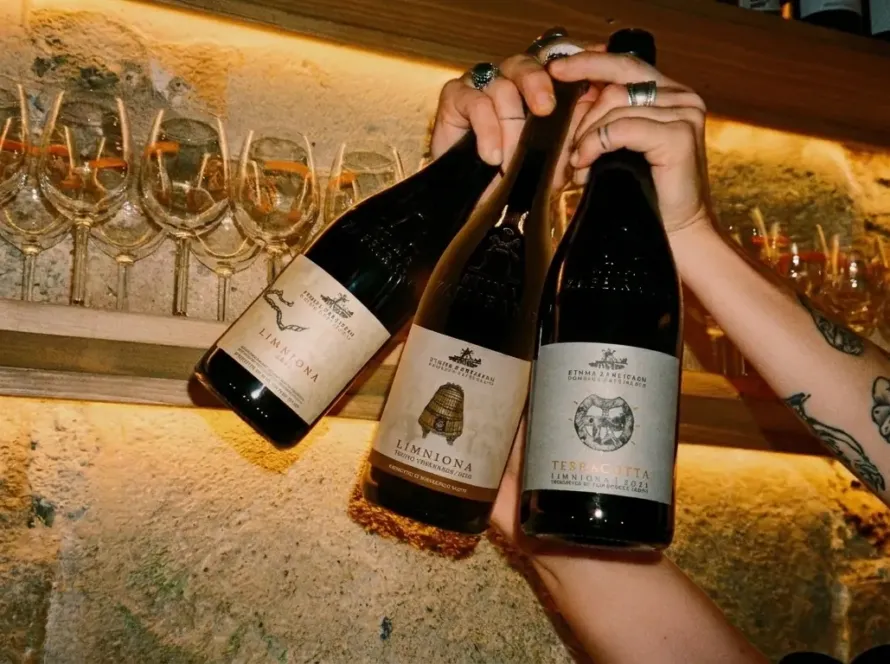
The Greek red that has been mistaken for Barolo, and three bottles that show why it deserves a place on your list.
Could a Greek red stand where your Nebbiolo stands? More easily than you might think. Xinomavro has been mistaken for Barolo in blind tastings, a wine often valued at twice the price. It has the pale colour, the bright acidity and the firm tannin that list-builders prize, and a nose that belongs to nobody else. Here is what it is, where it fits, what it can replace, and three wines to start with.
What is Xinomavro?
Xinomavro is the great red grape of northern Greece. The name translates as “sour black”, a nod to its acidity and its dark berries, although the wine itself is rarely dark. In the glass it is pale, often garnet at the rim, and it can fool you into expecting something light.
Then you smell it. Tomato, sun-dried tomato and olive are the signature, with red cherry and a herbal edge of thyme behind. On the palate, acidity and tannin do the work. It is a savoury, structured red with real grip, and it is made for the table.
Why does everyone talk about Naoussa?
Because Naoussa is where Xinomavro made its name. The PDO was established in 1971, and its red wines are 100% Xinomavro. The wider area also makes whites and Merlot or Syrah blends, but those sit under the broader PGI Imathia label. The vineyards sit on the south-east slopes of Mount Vermio, at 150 to 400 m, in a corner of Macedonia that is cooler than most people expect from Greece.
That cool, varied hillside gives the wines their tension. Soils change from plot to plot, so producers talk about single vineyards the way Piedmont talks about crus. For a sommelier, it means a region with a story you can tell in one sentence and explore for years.
Is Naoussa the only place it grows?
No, and that is part of the fun. Xinomavro also grows further east, on the Halkidiki peninsula, where vineyards climb the mountain slopes of Athos. Slate soils, altitude and cold nights slow the ripening, and the sea is never far away. The result is a different reading of the same grape: still savoury, still structured, with a mountain freshness of its own.
Where does it sit on a list?
Put Xinomavro in your structured reds, beside Nebbiolo and the other pale, high-acid wines that guests choose with food. It works on two levels. A younger Naoussa makes an easy glass pour that introduces the grape. An old-vine, single-vineyard bottle sits on the list as the wine with a story, the one a sommelier enjoys recommending.
At the table it loves savoury, generous dishes: mushroom risotto, red pasta, Sunday roast, slow cooked pork, and dry-aged steak. Serve it at 12 to 15 °C, and give the bigger bottles an hour in the decanter.
What can it replace?
The obvious candidate is the Nebbiolo slot, and there are good reasons to make the switch, or at least to pour the two side by side.
- A new story for the table. Guests have heard about Barolo many times. Few have heard that a Greek grape has been mistaken for it.
- A clear point of difference. It shares the pale colour, acidity, tannin and long life that Nebbiolo drinkers look for, with a savoury nose that stands apart from everything else in the section.
- Price-performance worth checking. A grape that has passed for a wine valued at twice the price earns a place in your margin maths. Taste the samples with our trade prices and compare.
- Range across one grape. Naoussa and Halkidiki give you two expressions to rotate, so the slot stays fresh.
Three Xinomavro wines to try
Domaine Dalamara, Paliokalias 2021, PDO Naoussa
In Greece, Paliokalias is considered by many the best Xinomavro, and it has a cult following to match. It comes from a single 6 ha block at the foot of Mount Vermio, with vines over 80 years old. Fermented on native yeasts and bottled unfiltered, it is pale, firm and savoury, built to age for 20 years or more. Decant it for an hour.
Domaine Dalamara, Naoussa 2023, PDO Naoussa
The easy way into the grape. Estate vineyards on the Vermio foothills, large old casks and no new oak. Fresh, lively and savoury, with tannins that are already gentle. A natural glass pour.
Akrathos, Xinomavro, PGI Halkidiki
Xinomavro from the slopes of Athos, at 550 to 700 m, on slate soils cooled by mountain winds and sea breezes. A year in French oak and time in bottle before release. The mountain’s answer to Naoussa, and a different expression of the variety for a list that wants more than one.
Taste them side by side
The quickest way to understand Xinomavro is to pour it. Ask us for samples of all three, set them beside the Nebbiolo you pour today, and decide which fits your list better.