Two guests share a plate of fried fish. A glass each, or the bottle?
It is early evening in a Warsaw restaurant, and the server has a second or two to suggest something. The grape is the easy part. Fried fish and Assyrtiko are a natural pair, and the salt on the plate finds the salt in the glass.
The format is the harder call. Should Assyrtiko by the glass be the answer here, or a bottle on the table?
Earlier this week we made the case for the mountain Assyrtiko from Halkidiki as a glass pour, and on a list with one Assyrtiko that still stands. Akrathos Assyrtiko 2022 is a very good glass.
Put a second, leaner Assyrtiko beside it, though, and the Akrathos changes jobs.
It moves up to the bottle page, and Zafeirakis Assyrtiko 2025, from Tyrnavos, takes the glass. I think more lists should be built this way. Assyrtiko is now grown in enough places, and made in enough ways, that one grape can hold two slots on the same list. What decides which wine goes where is the style.
Cool flint makes the glass wine, fine lees make the bottle wine
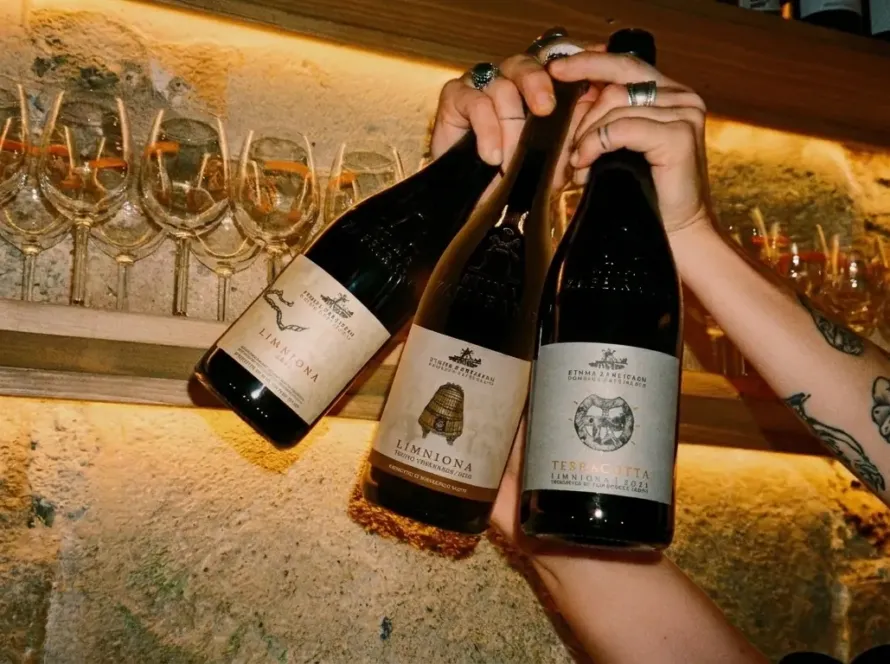
Start in Tyrnavos, in the foothills of Mount Olympus. Christos Zafeirakis studied oenology in Athens and worked in Piemonte, Alto Adige and Tuscany, then came home in 2005 and planted his first organic vineyard. His Assyrtiko grows at 200 to 300 metres on flint in sandy clay, and the mountain breezes keep the fruit cool through the summer.
No oak comes near the wine, and it finishes at 13%. Site and cellar push the same way: cool fruit keeps the acidity bright, and with nothing from a barrel to round it off, it arrives tense, mineral and clean, with a straighter line than the Santorini style a buyer may have in mind.
We list it as a glass wine for exactly that reason.
Halkidiki shapes the same grape differently. The Akrathos vineyard climbs to about 550 metres on slate and schist, caught between sea breezes and the north wind, and the wine rests on its fine lees before bottling. It finishes at 14%. The salt and the sharp mountain edge are still there. What the extra degree and the lees add is texture: something to hold on to across a plate and a long conversation.
Assyrtiko by the glass needs the direct style
Picture the two wines in each other's places first. The textured wine is open by the glass as the crisp white, the leaner one waits on the bottle page, and by nine o'clock on a busy Thursday the open bottle has been poured twice. The guests who asked for something dry and crisp got more weight than they had in mind, and the next table took the Sauvignon instead.
Nothing is wrong with the wine. It is sitting in the wrong slot.
Now think about where a guest actually meets a glass pour. It sits in a short column of whites, next to the familiar names, and the guest gives that column a few seconds. Whatever is there has to make sense in one sip, with no explanation and no build-up.
The Zafeirakis does exactly that. A guest asks for something dry and crisp, gets a taste, nods, and the glass is poured. It sits happily beside a first course of fried fish, shellfish or the lighter Mediterranean plates, and it never needs the server to sell it.
Price, in this slot, is about permission. The glass has to sit where a guest is willing to try a grape they may not know, without stopping to think about it. A wine that delivers its whole character in the first sip earns that place, because the guest never feels they took a gamble.
That is also what keeps the open bottle moving. A glass pour lives on being chosen again and again across an evening, and the style that wins the first sip is the one guests keep reaching for.
The textured style earns the bottle
On the bottle page, the Akrathos has room to show what the lees gave it. It has the grip to carry a main course and the presence to hold a table of two or four through a whole meal. It rewards a little time in the glass and a plate in front of it.
A bottle order gives it all of that. Guests choosing a bottle have already committed to the evening, and they are sharing and in no hurry. They are usually ready to spend a little more on a wine with more to say, and the bottle price is where the more structured wine makes sense to them.
The pressure on the bar disappears too. A bottle opened at the table is finished at the table, so the wine with more weight never has to wait in the fridge door for the right guest to come along.
Same grape, so the guest has already said yes
This is where one grape does better than two.
In my view, the hardest moment for any Greek white on a Polish list is the name. A guest meeting Assyrtiko for the first time has to read it, say it, and trust it, and the glass pour is where that happens. By the main course, they have done all three, and they liked what came with it.
So when the server suggests a bottle, it is not a new ask. Move the table to a different grape and the conversation starts again from nothing: another name to read, another unknown in the glass. Keep it within Assyrtiko and the guest is simply being offered more of a choice they have already made, from a different place.
The line for staff almost writes itself. "You enjoyed that one with the fish? This one comes from the mountains of Halkidiki. Same grape, more texture, and it is lovely with the main course."
In a busy dining room in central Warsaw, the team has seconds per table, and a pairing they can explain with one grape name is a pairing they will actually offer. Train them on the grape once and the two listings stop competing for the same order. The guest who arrives curious leaves having learned something about Greece, and the table ends up with a bottle it chose on its own.
Back at the table, the fried fish is finished. The two guests started with a glass each of the Zafeirakis, liked it, and asked what else there was. When the main course arrived, a bottle of Akrathos arrived with it.
The glass asked the question. The bottle was their answer.
Book a tasting and we will bring both wines to you, so you and your team can taste the glass and the bottle side by side.